
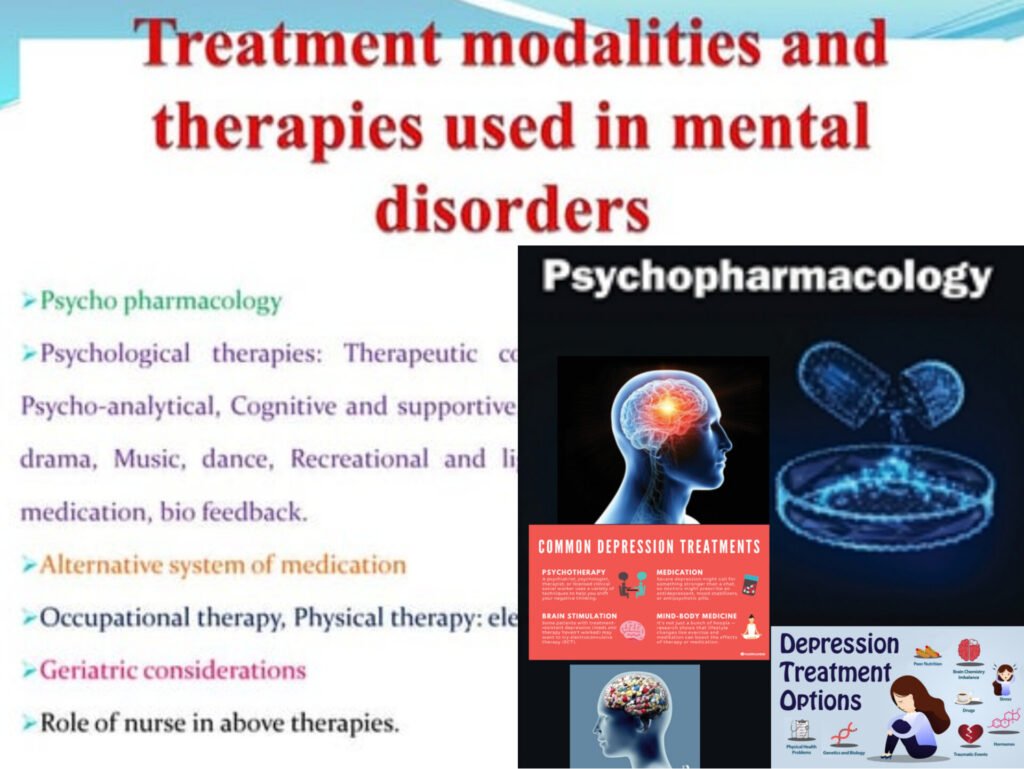
UNIT-5: THERAPEUTIC MODALITIES & THERAPIES USED IN MENTAL DISORDERS
🧠 1. Introduction to Psychiatric Therapy
- Patients with mental disorders may not accept that they are ill.
- Many resist treatment, are uncooperative, or even fearful.
- Nurses play a crucial role as they are the ones who:
- Stay in close contact with patients.
- Monitor progress.
- Develop trust and therapeutic relationships.
💊 2. Psychopharmacology
- It is the study of drugs used to treat mental disorders.
- Psychotropic drugs alter chemical transmission in the brain, especially neurotransmitters, which affect mood, behavior, perception, and cognition.
🔑 Key Terms:
- Efficacy – Maximum effect a drug can produce.
- Potency – Amount of drug required to produce an effect.
- Agonist – A drug that activates a receptor.
- Antagonist – A drug that blocks a receptor.
🧬 3. Neurotransmitters and Drug Action
- Neurotransmitters are chemicals that transmit messages between neurons.
- They are synthesized in the presynaptic neuron and released at the synapse.
- After binding to receptors on the postsynaptic neuron, they trigger or inhibit electrical impulses.
👩⚕️ 4. Nursing Guidelines for Medication Administration
- Never give medication without a proper prescription.
- Document every administered medication carefully.
- Call the patient by name and ensure the medication is swallowed.
- Count and inspect medications daily.
- Maintain proper hygiene and use clean hands and tools while handling drugs.
📘 5. Patient and Family Education in Psychopharmacology
Areas to focus on:
- Side Effects:
- Explain common and serious side effects.
- Educate patients on what to expect and what to report.
- Safety Measures:
- Some drugs like tricyclic antidepressants have a narrow therapeutic index (small margin between safe and toxic dose).
- Drug Interactions:
- Warn about combining psychotropic drugs with alcohol or other medications.
- Special Populations:
- Elderly: May have slower drug metabolism.
- Pregnant/Lactating Women: Psychotropic medications can affect fetal or infant development. Use with caution and supervision.
🧪 6. Types of Psychotropic Drugs
📌 A. Antipsychotic Drugs
Used in:
- Schizophrenia
- Delirium
- Dementia
- Mania
- Psychotic depression
- Autism, ADHD
🔷 i. Typical (First Generation) Antipsychotics
| Drug | Dose |
|---|---|
| Chlorpromazine | 300–1500 mg/day |
| Trifluoperazine | 5–20 mg/day |
| Haloperidol | 5–100 mg/day |
| Fluphenazine decanoate | Monthly injection |
🔷 ii. Atypical (Second Generation) Antipsychotics
| Drug | Dose |
|---|---|
| Clozapine | 50–450 mg/day |
| Risperidone | 2–10 mg/day |
| Olanzapine | 5–20 mg/day |
| Quetiapine | 150–750 mg/day |
| Ziprasidone | 20–80 mg/day |
📋 7. Indications for Antipsychotic Drugs
Organic Psychiatric Disorders:
- Delirium
- Dementia
- Drug-induced psychosis
Functional Psychiatric Disorders:
- Schizophrenia
- Schizoaffective disorder
- Paranoia
Mood Disorders:
- Mania
- Major depression with psychotic features
Childhood Disorders:
- Autism
- ADHD
- Conduct disorders
- Enuresis (bedwetting)
Neurotic and Other Disorders:
- Obsessive Compulsive Disorder (OCD)
- Severe anxiety
- Anorexia nervosa
Medical Conditions:
- Huntington’s chorea,
- Tetanus,
- Intractable hiccups,
- Vomiting in cancer,
- Eclampsia,
- Heat stroke,
- Severe pain,
✅ Conclusion
The management of mental disorders requires a multidisciplinary approach, where medications, patient education, nursing care, and emotional support all play essential roles. Understanding drug action, safe administration, and monitoring is key to effective psychiatric nursing.